

Article: Tom Fletcher's Triumph Bobber 1200, by FCR Original
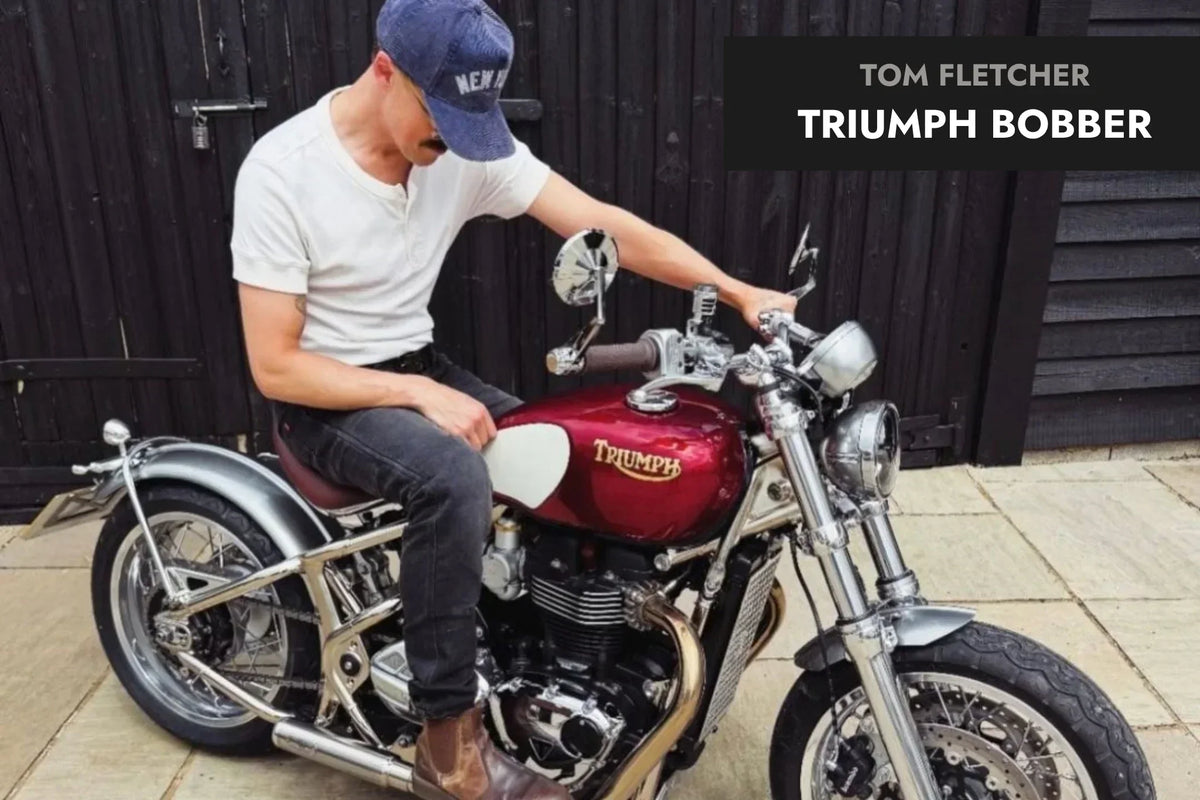
Tom Fletcher's Triumph Bobber 1200, by FCR Original
For Tom Fletcher, musician and member of the British band McFly, FCR Original delivers a new interpretation of the Triumph Bobber 1200. A build where custom paint, polished aluminium, chrome and FCR Accessoires parts developed in our workshop redraw one of Triumph's most iconic motorcycles. FCR Accessoires is the shop of the FCR Original workshop: the parts fitted to this build are exactly the ones you will find on sale. Here is how this bike was conceived, and above all which parts make it up, all available to develop your own Bobber.

Contents
- Transform without distorting
- A very British elegance
- Chrome, aluminium and visible mechanics
- Rethinking the proportions
- An exhaust that shapes the bike
- A minimalist cockpit
- A seat that changes the silhouette
- Protecting without adding weight
- The FCR Accessoires parts on this build
- Frequently asked questions
Transform without distorting
Some motorcycles you transform. Others you mainly try to reveal. When this Triumph Bobber 1200 arrived in our Chauvigny workshop, our work followed that second philosophy.
The base already has a particularly strong identity: a low silhouette, an imposing twin and that instantly recognisable architecture that gives the Bobber all its character. Our role was therefore to find the right balance.
Transform without distorting. Strip back without erasing. And bring in enough FCR Accessoires details to create a truly singular motorcycle.

A Triumph Bobber with a very British elegance
The first element that catches the eye is naturally the tank. Its deep red is paired with cream side panels outlined by a black pinstripe. The Triumph logo gets a gold finish, while an FCR Original signature discreetly takes its place on the tank.
Red, cream, gold, brown leather, chrome and aluminium: the chosen palette immediately sets the tone. Rather than breaking with the Triumph identity, we worked around its classic codes to give them a more personal reading. The result embraces a certain British elegance while gradually revealing the characteristic elements of the FCR Original world.
Chrome, aluminium and visible mechanics
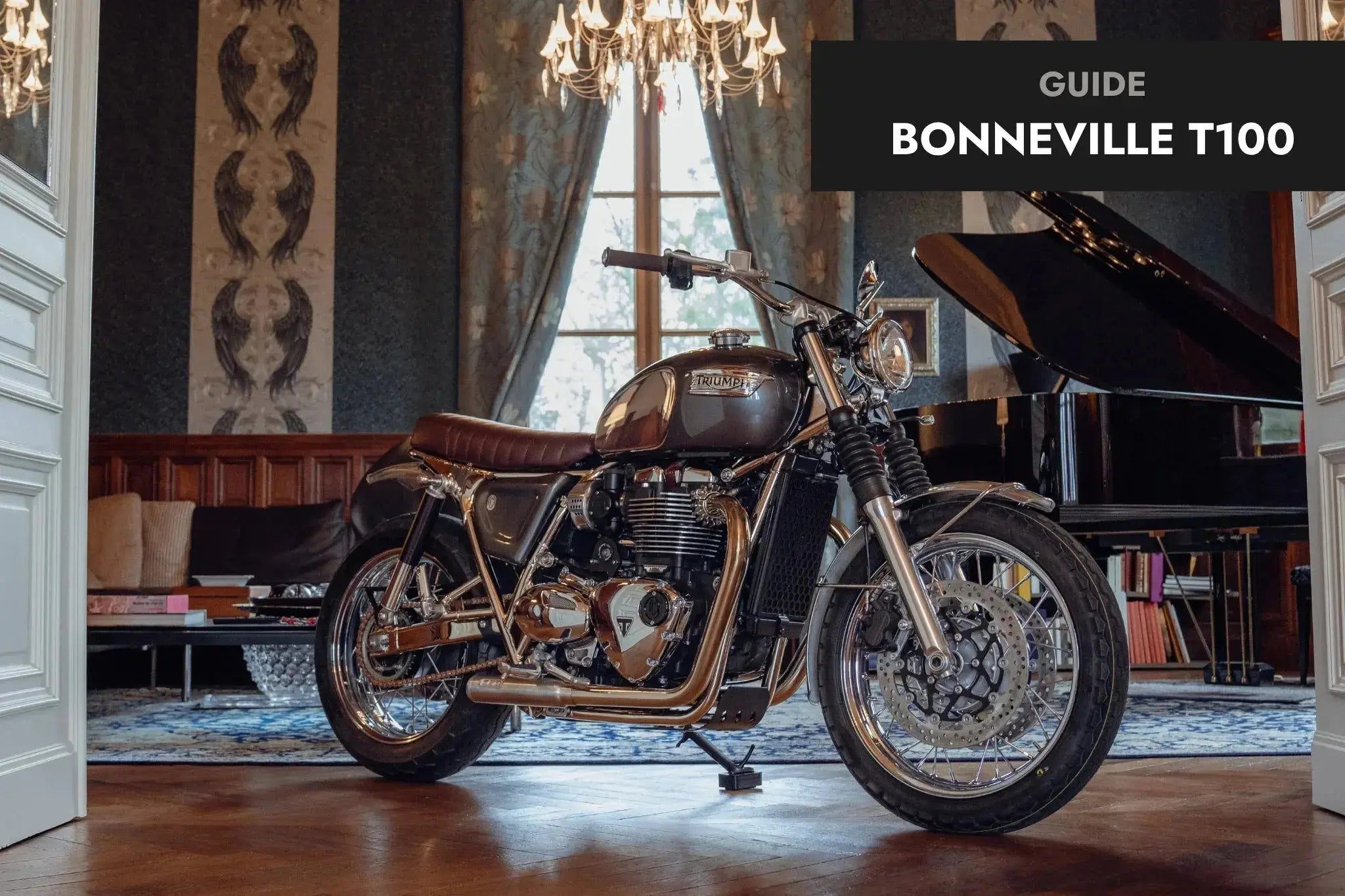
Around the tank, materials take centre stage. The frame gets a nickel-plated finish that immediately transforms how the bike is perceived and creates a strong contrast with the black engine.
Polished aluminium then appears in various places on the build, accompanied by many chrome touches. Rather than hiding the mechanics, the choice was made to showcase them. The engine therefore stays visually at the centre of the bike. The covers, the various metal finishes and the K&N air filters all support this intention to let the mechanical character of the Bobber show.

Rethinking the proportions
A build is not only about adding new parts. Proportions matter just as much. The Triumph gets 17-inch wheels front and rear, with chromed rims and stainless steel spokes.
At the front, the shortened polished aluminium fender frees up more of the wheel and visually lightens the front end. The same work is done at the rear. These changes keep the low, muscular stance typical of the Bobber while giving the bike a lighter silhouette. In profile, the eye travels far more naturally from the tank to the rear wheel.
An exhaust system that shapes the bike
On this build, the exhaust is not treated as a mere mechanical component. It is an integral part of the silhouette.
The FCR Accessoires exhaust system follows the shapes of the twin before running very low along the bike. This position visually opens up the entire central and rear section of the Triumph. The metallic finish of the system echoes the nickel-plated frame, the rims and the various polished aluminium elements, while creating a contrast with the black of the engine.

The workshop view
This is precisely the approach we look for when developing our own parts: making sure function and design are never separated. An exhaust system has to sound right, but it also has to hold its place in the design of the bike.
A deliberately minimalist cockpit
The same stripping-back work is found at the front. The bike gets a silver Superbike handlebar with brown grips that directly echo the colour of the seat.
The original speedometer is kept while the mirrors are replaced with chromed Highsider Montana models. The headlight also keeps its original design, paired with polished brackets. The small Motogadget indicators further lighten the front end.
The goal was not to multiply elements, but on the contrary to visually remove anything that could draw the eye away from the essentials.

A seat that changes the silhouette
On a Triumph Bobber, it is hard to see the seat as a simple accessory. Its position and shape directly shape the bike's identity. For this build, the choice fell on a solo seat in brown leather with matching stitching.
Its colour brings a warmer material into the midst of metal, chrome and aluminium. Combined with the brown grips, it also creates a visual thread between the front and the rear of the bike. A detail in appearance. But on a build where every element is deliberately visible, it is precisely these details that build the coherence of the whole.
Protecting without adding weight
Customising a motorcycle does not necessarily mean favouring looks over function. Some parts on this Triumph were designed precisely to bring the two together.
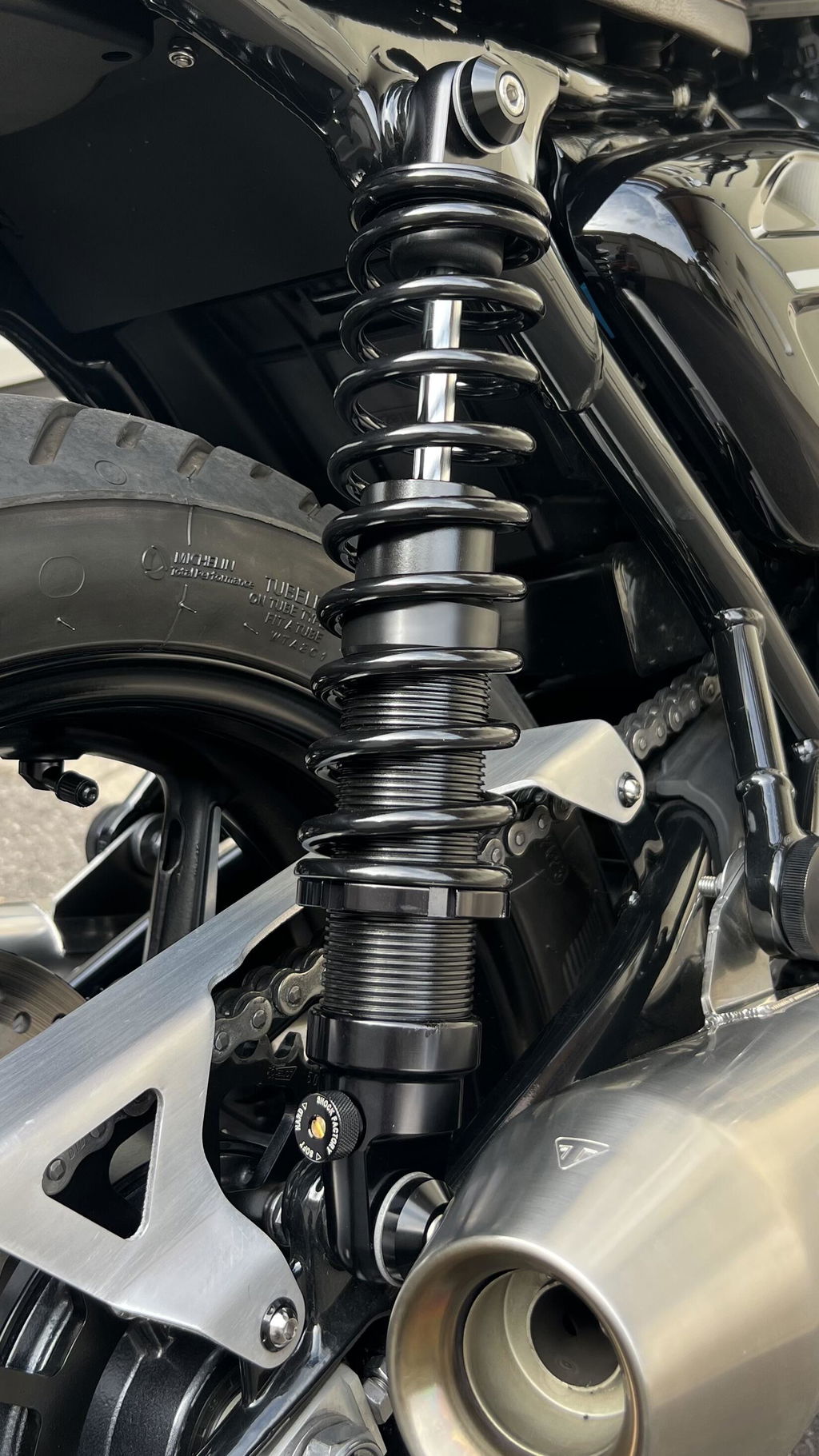
The radiator grill, the sump guard and the chain guard from FCR Accessoires protect various parts of the bike while fitting visually into the build. The choice of shapes and finishes keeps everything coherent with the other metal parts on the Bobber. Functional elements that become an integral part of the design themselves.


The FCR Accessoires parts fitted to Tom Fletcher's Triumph
Some of the parts developed to build the identity of this Triumph Bobber are also available for your own projects. Born in the FCR Original workshop, they are sold through FCR Accessoires. Each part can be used independently to develop a Triumph Bobber step by step and build a bike that looks like you.
 Exhaust system | Triumph BobberA central part of this build, designed to redraw the lower section of the bike and put its engine more in the spotlight.
 Radiator grill | TriumphA guard that dresses the radiator while fitting naturally into the lines of the bike.
 Chain guard | Triumph BobberA functional element reworked to bring a cleaner finish to the drivetrain.
 Sump guard | Triumph BobberA guard that dresses the lower part of the engine and strengthens the coherence of the build.
 Universal license plate holder | MotorcycleA solution designed to visually free up the rear of the bike and keep a clean silhouette.
From Chauvigny to British roads
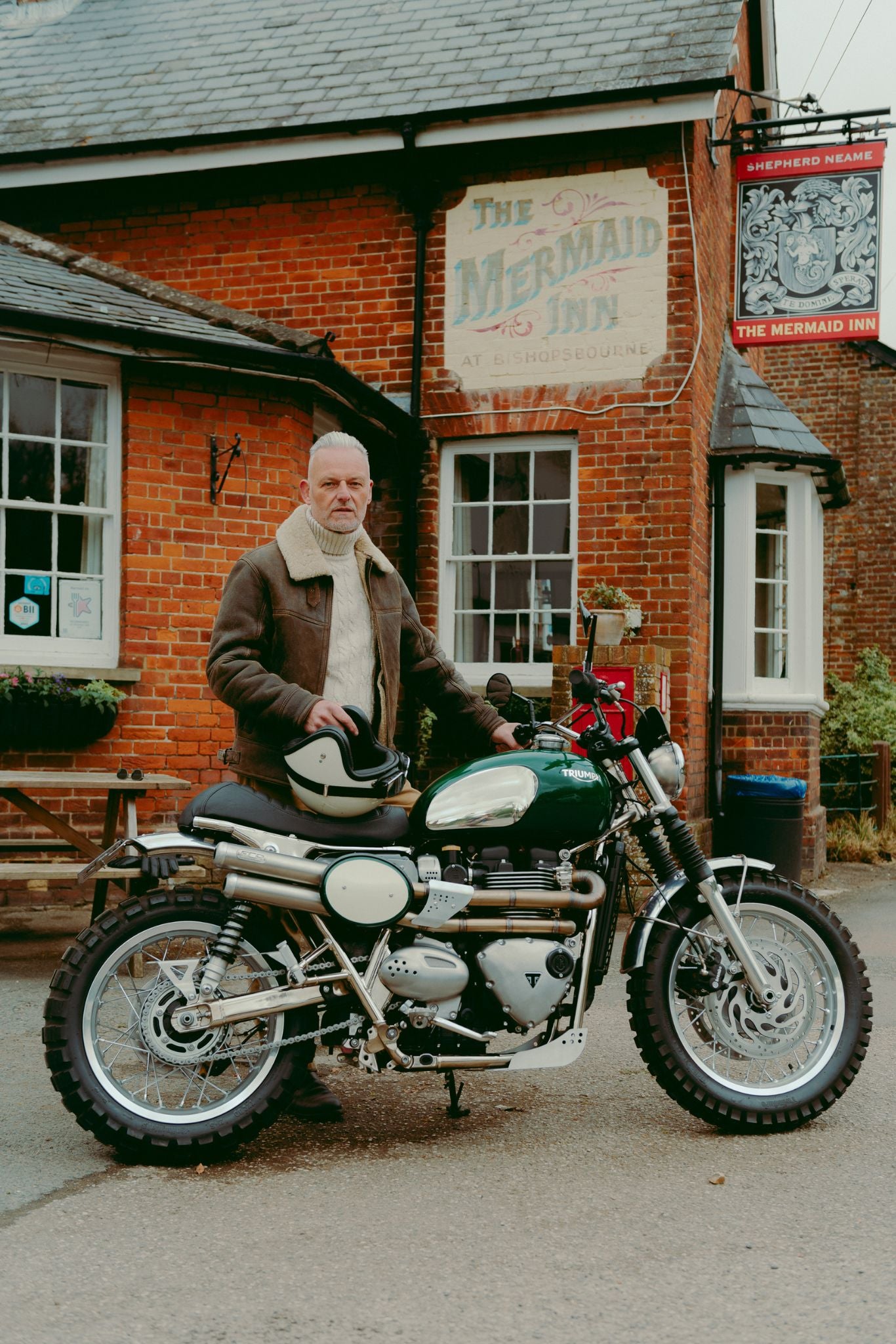
After being designed and built in our Chauvigny workshop, this Triumph Bobber 1200 left France to join Tom Fletcher in the United Kingdom.
When you look at it, the original model remains instantly recognisable. Its engine, its architecture and the spirit of the Bobber are still there. But once you start looking at the details, the bike tells another story. The paint, the frame, the wheels, the seat, the exhaust, the fenders, the lighting, the various aluminium parts. Taken separately, some changes are deliberately subtle. It is their accumulation and their coherence that truly transform the bike.
A philosophy we apply to every one of our builds: not modifying for the sake of modifying, but stepping in where each detail can contribute to the overall balance. A new bike leaves the workshop, but above all a new interpretation of the Bobber now takes to the road. And that is ultimately where every FCR Original project truly finds its meaning.
Frequently asked questions
Which FCR Accessoires parts are fitted to Tom Fletcher's Triumph Bobber?
The build features the Triumph Bobber exhaust system, the radiator grill, the chain guard, the sump guard and the universal license plate holder, all developed by FCR Accessoires in the FCR Original workshop. Chromed Highsider Montana mirrors and K&N air filters complete the set. Each of these parts is available separately and can be fitted to a standard Triumph Bobber 1200.
Can these parts be fitted to a standard Triumph Bobber 1200?
Yes. The FCR Accessoires parts on this build fit on the original mounting points of the Triumph Bobber 1200, with no frame modification or welding. Fitting is reversible, which lets you develop the bike step by step, one part at a time, without committing to a full transformation.
Who is Tom Fletcher and why this build?
Tom Fletcher is a musician, author and member of the British band McFly. This Triumph Bobber 1200 was designed and built for him in the FCR Original workshop in Chauvigny, near Poitiers, before heading to the United Kingdom. The aim of the project was to bring out the Bobber's character rather than transform it radically.
What is FCR Original's build philosophy on a Bobber?
Transform without distorting. The original model must remain instantly recognisable, with its engine, its architecture and the spirit of the Bobber. The work focuses on paint, proportions, materials and finishes, so that the accumulation of coherent details transforms how the bike is perceived without erasing its identity.
Which part should you start with to customise your Triumph Bobber?
The exhaust system changes how the bike is perceived the most, because it redraws the whole lower section. Next come the protective parts that contribute to the design, such as the sump guard, the radiator grill and the chain guard, then the plate holder that cleans up the rear. Each part can be fitted independently.
Where are FCR Accessoires parts made?
FCR Accessoires parts are designed, developed and tested in the FCR Original workshop in Chauvigny, near Poitiers. They come from real builds like Tom Fletcher's, before being offered in the shop. All parts come with a 2-year warranty and ship within 24 to 48 working hours.
Ready to develop your Triumph Bobber?
Discover the Triumph Bobber accessories range, designed and made by FCR Original.
See the Triumph Bobber collectionA question about compatibility with your Bobber? Contact the workshop at +33 5 49 62 03 26 or by email at accessories@fcroriginal.com.
The FCR Accessoires team · 16 September 2026