


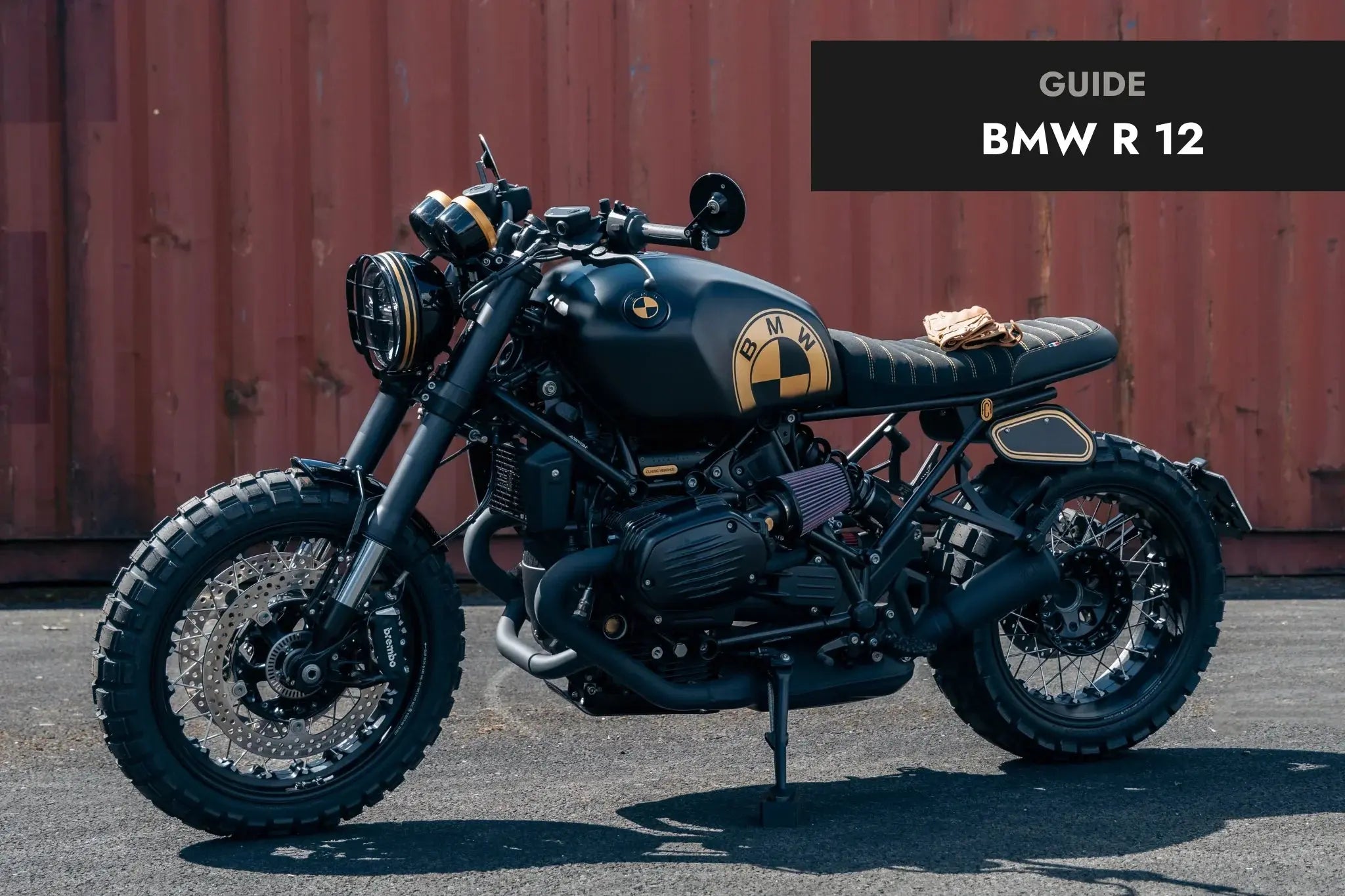
Complete BMW R12 Guide: Everything You Need to Know About the New Heritage Generation and Its Accessories
In 2024, BMW Motorrad turned a new page in its Heritage story with the R12 platform. Ten years after the R NineT, over 106,000 units sold worldwide and hundreds of builds by the world's best workshops, the Bavarian manufacturer chose to start from scratch: new frame, new running gear, new design, while keeping the air/oil-cooled 1,170 cc boxer engine that made the formula so successful. The result is a range of four motorcycles (R12 NineT, R12, R12 S, R12 G/S), each with its own personality, but all sharing the same promise: being the most refined customisation base BMW has ever offered. At FCR Accessoires, we have been building BMW Heritage motorcycles for over 10 years in our workshop in Chauvigny, near Poitiers, France. This guide offers a complete tour of the R12 platform: its heritage, technical specifications, four variants explained, our first FCR Original build, and the full catalogue of accessories we have developed for it.
Table of contents
The BMW Heritage legacy: from the R 32 to the R12
To understand the R12, you need to go back to the source. In 1923, BMW launched the R 32, its very first motorcycle model. Under the tank, a flat-twin engine with shaft drive: an architecture the manufacturer has never abandoned in over a century of production. This loyalty to the boxer is not stubbornness, it is a signature. The immediate torque, the distinctive sound, the width of the cylinders protruding from the frame: every BMW Heritage is recognisable in a split second, by sight and by ear.
Two models have particularly marked recent history. In 1973, the R 90 S became the first production motorcycle in the world fitted with an aerodynamically designed fairing. With its 67 hp (a considerable figure at the time), it won the Isle of Man Production TT in 1976, the Daytona 200 the same year, and the AMA Superbike Championship in 1977 with Reg Pridmore. The 1975 Daytona Orange version is now one of the most sought-after BMWs among collectors. In 1980, the R80 G/S invented a category on its own: the adventure trail. When it lined up at the Paris-Dakar with its big 800 cc boxer where everyone else was running lightweight singles, it was seen as an anomaly. It won the event in 1981, 1983, 1984 and 1985. If motorcycles like the Harley-Davidson Pan America or the Ducati DesertX exist today, it is because the R80 G/S paved the way.
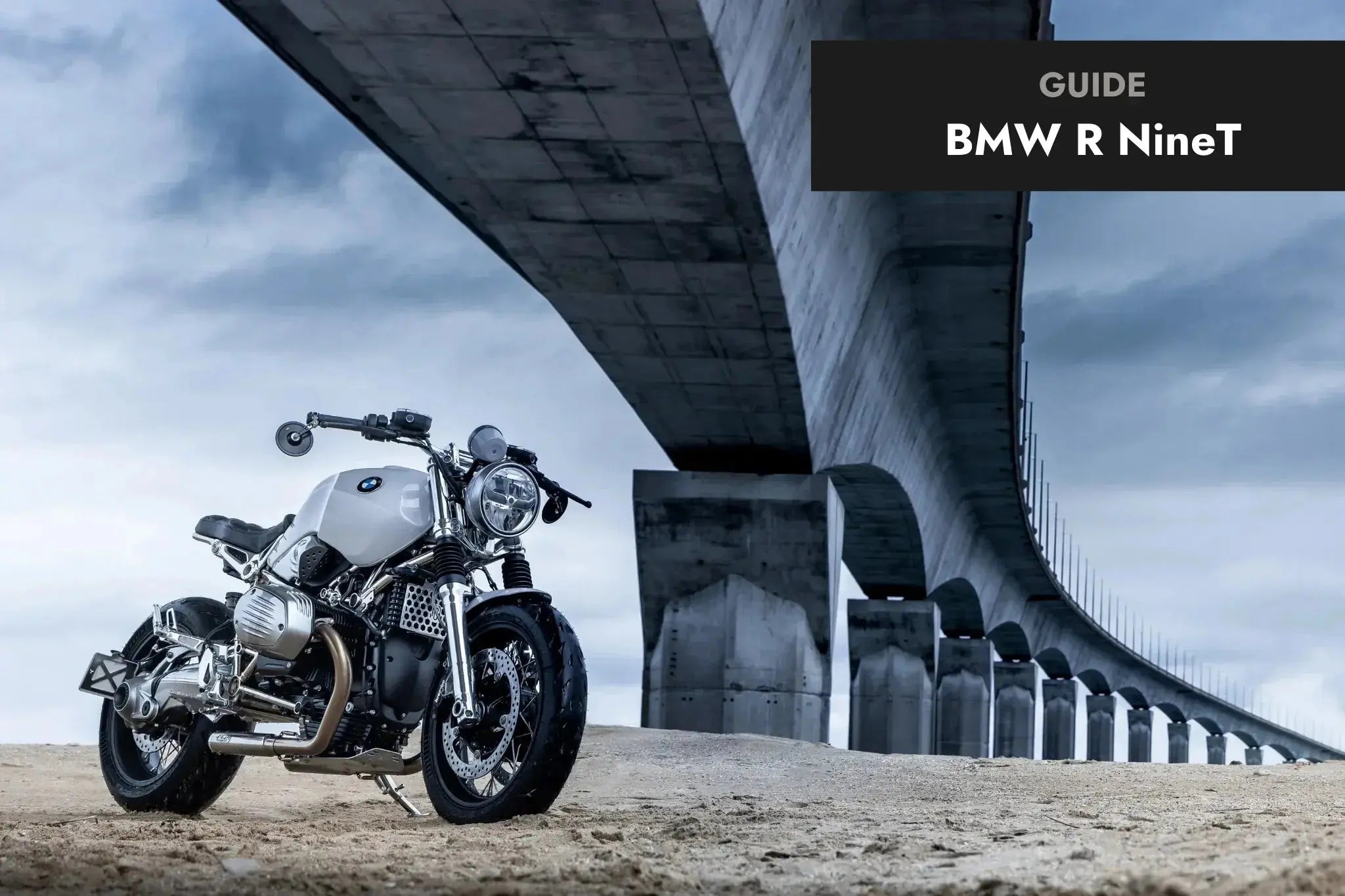
In 2014, to celebrate its 90th anniversary, BMW Motorrad launched the R NineT. The idea was simple: offer a neo-retro roadster with a boxer engine, designed from the outset to be customised. Removable rear subframe, modular architecture, raw aesthetics. The success was massive. Over 106,000 units sold in 10 years, five variants (Classic, Pure, Scrambler, Urban G/S, Racer), and a community of builders that made it one of the most popular custom bases in the world. At FCR Original, this is the motorcycle where it all started. Our three build ranges (Classic Heritage, Urban, OffRoad) were developed on the R NineT, and every accessory sold on FCR Accessoires was born in our workshop on one of these machines.
In 2024, the R12 NineT takes over. The "R12" name references the displacement (1,200 cc), but also a historic 1935 BMW, the first production motorcycle to receive a hydraulically damped telescopic fork. The connection with the past is deliberate: BMW has always known how to use its heritage as a springboard to the future.
BMW R12 technical specifications
The R12 platform is built around the same 1,170 cc air/oil-cooled flat-twin boxer engine as the R NineT, but installed in an entirely redesigned environment. The tubular trellis frame replaces the previous bolted-subframe structure. The golden 45 mm inverted fork comes from the S 1000 R, BMW's sport roadster. Starting is keyless thanks to the Keyless Ride system. The exhaust has been redesigned with a chrome manifold and twin silencers with conical outlets. And for the first time on a Heritage boxer, a quickshifter (Shift Assistant Pro) is available as an option.
Engine: 1,170 cc flat-twin boxer, 4-stroke, air/oil-cooled, DOHC, 4 valves per cylinder, balance shaft
Power: 109 hp (80 kW) at 7,000 rpm (R12 NineT / S / G/S) or 95 hp (70 kW) at 6,500 rpm (R12)
Torque: 115 Nm at 6,500 rpm (NineT / S / G/S) or 110 Nm at 6,000 rpm (R12)
Transmission: 6-speed dog-engagement gearbox, hydraulic dry single-plate clutch, shaft drive
Frame: Tubular steel trellis, modular rear subframe
Fork: 45 mm inverted (NineT / S), adjustable on NineT. Telescopic (R12). Off-road adapted (G/S)
Brakes: Twin 310 mm front discs, 4-piston radial monobloc caliper (NineT / S). Single 310 mm disc (R12). ABS Pro semi-integral
Weight: 220 kg wet (NineT / S), 227 kg (R12)
Fuel tank: 14 litres
Seat height: 795 mm (NineT), 754 mm (R12)
Emissions: Euro 5+
Keyless Ride: Yes, all 4 variants
A2 licence: R12 native 95 hp. R12 NineT / S / G/S restrictable to 95 hp or 48 hp (35 kW)
Some striking figures: the tank drops from 18 litres (R NineT) to 14 litres (R12), a choice BMW made to gain compactness and improve the lines. The R12 cruiser's seat height falls to just 754 mm, one of the lowest in the segment. And the bore x stroke ratio (101 mm x 73 mm) remains unchanged, meaning the engine character, that generous torque available from 2,000 rpm, is exactly the same as on the R NineT.

R NineT vs R12 NineT: what actually changes
When BMW announced the R12 NineT, many assumed it was a simple restyle. It is in fact a thorough overhaul. Here are the major differences we have identified after months of working on both platforms in our workshop.
The frame is the most significant change. The R NineT used a tubular frame with a bolted rear subframe that could be removed in minutes, a major asset for builders. The R12 adopts a stiffer, lighter trellis frame, with a rear subframe that remains modular but with a different design. The wheelbase increases from 1,487 mm to 1,513 mm (R12 NineT) or 1,520 mm (R12 cruiser), providing superior high-speed stability.
The golden 45 mm inverted fork, inherited from the S 1000 R, replaces the R NineT's 46 mm fork. It is adjustable for preload, rebound and compression on the R12 NineT. On the R12 cruiser, it is a non-adjustable inverted fork of the same diameter, with travel reduced to 90 mm (vs 120 mm on the NineT).
Keyless Ride is a genuine everyday improvement. No more searching for the key: a button on the right handlebar is enough to start up. The system uses a smart fob you keep in your pocket. However, you still need to pull out the integrated key within the fob to open the fuel cap or engage the steering lock, a point noted by several specialist press testers.
On the electronics side, the R12 gains Roll and Rock riding modes (the equivalent of the R NineT's Road and Rain modes), Dynamic Traction Control (DTC), Dynamic Engine Brake Control (MSR) and ABS Pro with lean angle sensitivity. A 3.5-inch TFT display is available as an option, replacing the standard analogue dial.
What does not change: the 1,170 cc boxer engine (same bore, same stroke, same architecture), shaft drive, and the overall spirit of a motorcycle designed to be customised. However, accessories between the R NineT and R12 are not interchangeable: different frame, different mounting points, different dimensions. At FCR Accessoires, we have developed dedicated ranges for each generation.
The R12 NineT is a more technically accomplished motorcycle than the R NineT: stiffer frame, higher-spec fork, richer electronics, Keyless. But the R NineT retains advantages that some builders miss: an 18-litre tank (vs 14), a simpler rear subframe to remove, and an already large used market with attractive prices. Both generations coexist in our catalogue, and both deserve to be customised.
The 4 BMW R12 variants explained
Unlike the R NineT whose variants arrived over the years, the R12 platform was designed from the outset to host multiple personalities. The R12 NineT and R12 cruiser launched simultaneously in 2024. The R12 S followed in early 2025. The R12 G/S is expected in 2026. All share the same engine block, transmission and Keyless system, but each tells a different story.
R12 NineT: the premium sport roadster
The direct heir to the R NineT, and the heart of the range. 109 hp, adjustable 45 mm inverted fork, twin radial front discs, brushed aluminium finishes, removable rear subframe. The R12 NineT is the most technical platform in the Heritage range, and the base on which FCR Original develops its most ambitious builds. The specialist press has unanimously praised its road behaviour. Cycle News describes a chassis that "rolls into corners and finds natural flow, with absolute stability," while the NineT Owners forums highlight powerful brakes and suspension that absorbs bumps "like a 3 cm mattress between road and wheels, while mysteriously retaining precise feedback."
R12: the accessible neo-retro cruiser
The R12 is the genuine newcomer in the range. Where the R NineT never had a cruiser version, BMW offers here a motorcycle with a low seat (754 mm), forward-mounted footpegs and raised handlebars. The engine is the same 1,170 cc boxer but restricted to 95 hp (70 kW), making it natively A2 licence compatible without additional restriction. Torque remains very generous (110 Nm at 6,000 rpm), and the contained weight of 227 kg makes it far more agile than an R 18 (345 kg). User feedback highlights a surprisingly easy handling for a cruiser, and a bobber look that turns heads in dealerships. The perfect base for bobber builds, aesthetic custom projects and quick transformations.
R12 S: the factory cafe racer
With the R12 S, BMW pays tribute to the 1973 R 90 S, the bike they consider their "first superbike." The handlebar-mounted half fairing, the Lava Orange Metallic paint (a nod to the 1975 Daytona Orange), the brushed aluminium tank with red "S" lettering, the Option 719 spoke wheels: everything evokes the 1970s, but with 2025 technology. Mechanically, it is an R12 NineT with dedicated bodywork. The flat bar remains identical to the NineT's, no low clip-ons like on the old Racer. BMW chose long-distance comfort over a radical stance, and it is a smart choice: the position stays comfortable all day. The design is already very polished out of the factory, which limits the scope for customisation but makes it an instant collector's piece.
R12 G/S: the neo-retro trail
The R12 G/S transposes the R80 G/S DNA into the R12 platform. 21-inch front wheel, suspension adapted for mixed road/off-road use, high mudguard, raised ergonomics, unapologetic Dakar styling. BMW announces 109 hp, a weight of around 225 kg and a 0-60 mph time of 4.1 seconds. Compared to the Urban G/S from the R NineT generation (which was more of a visual homage than a genuine trail), the R12 G/S makes a serious off-road claim with its large front wheel and increased-travel suspension. The ideal base for scrambler and neo-retro adventure builds.
The R12 NineT remains our top pick for an ambitious first customisation project. Its adjustable inverted fork, twin radial discs and premium finishes offer the best starting point for a cafe racer or full custom. The R12 cruiser is ideal for an accessible bobber/custom project, with the bonus of native A2 compatibility. The R12 S is stunning as-is, keep it stock or add a few subtle touches. The R12 G/S is the dream base for a serious scrambler. And in every case, our entire R12 catalogue is compatible with all 4 variants.
What the R12 changes for builders
When a new platform arrives, the first question a workshop like ours asks is: what can I do with it? After several months of working on the R12 NineT in our Chauvigny workshop, here is what we have found.
The trellis frame is stiffer and lighter than the R NineT's. It offers more clearance around the engine, making it easier to route custom exhausts and integrate aftermarket components. The rear subframe remains modular, but its design is different: it allows bespoke rear loops that integrate the electronics under the seat far more cleanly than on the R NineT.
The redesigned cylinder heads deserve attention. BMW chose a rounder, more vintage design reminiscent of the old 2-valve boxers. It is a strong aesthetic choice: the rocker covers are more visible, more expressive, and our Heritage rocker covers integrate with even greater coherence on the R12 than on the R NineT.
The air box removal is cleaner on the R12. The stock air box is better positioned, allowing more accessible removal and an even neater integration of exposed K&N filters. The visual result, with the K&N cones appearing between the cylinders, is striking.
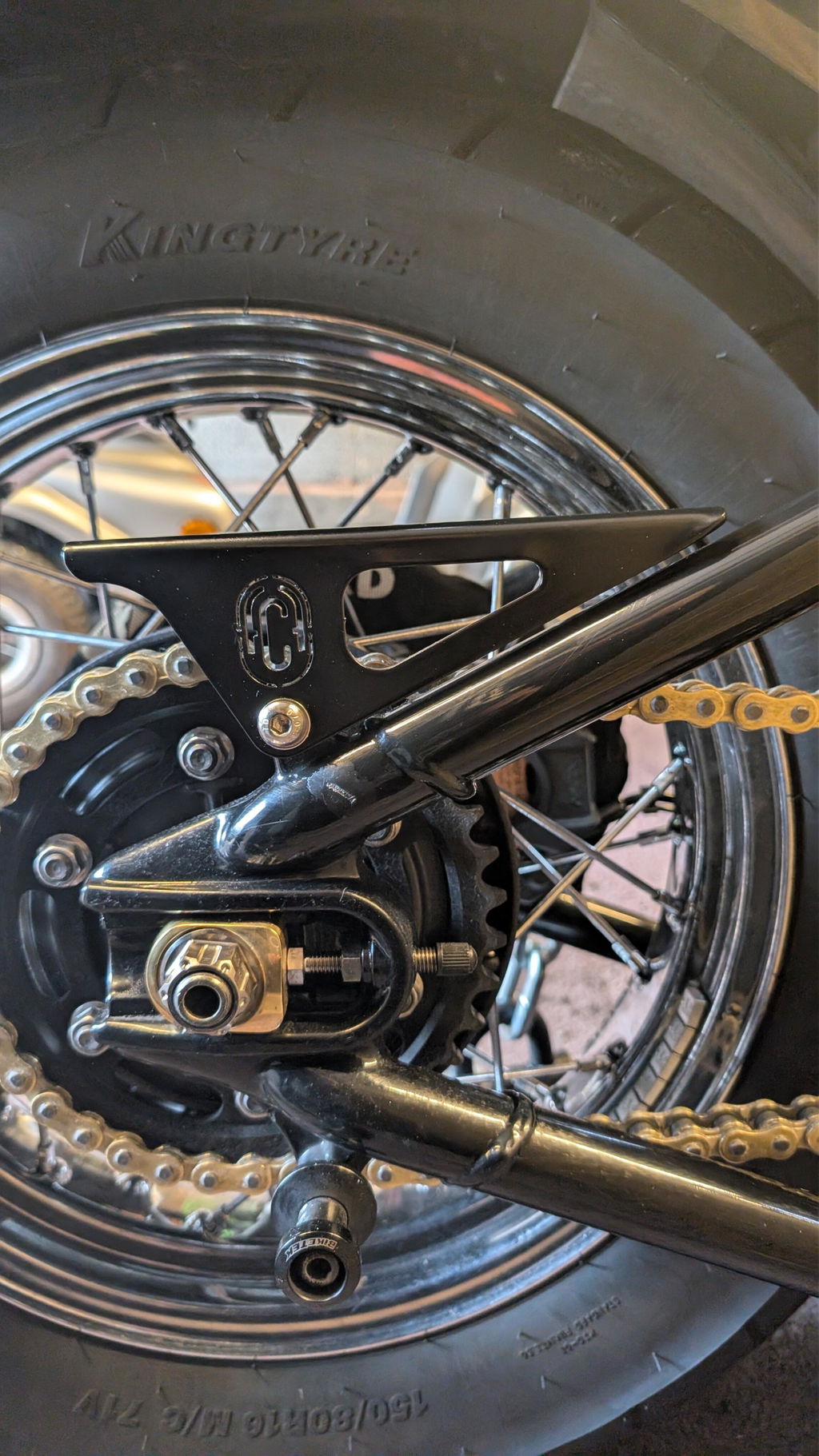
The cast aluminium wheels are replaced by our PVM AC Schnitzer forged wheels thanks to mounting made easier by revised fixings. The weight saving is significant and the visual transformation is radical.
Finally, the Keyless system simplifies bespoke rear loop projects: no more ignition switch and wiring to manage, freeing up space and reducing the complexity of builds that touch the rear of the motorcycle.
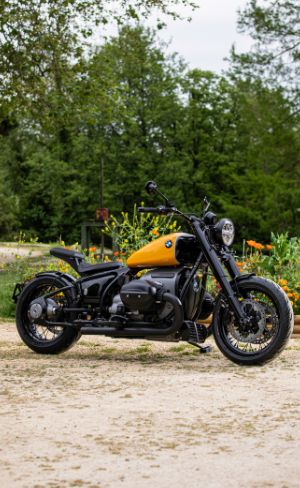
Our FCR Original R12 NineT build
The R12 NineT arrived at the FCR Original workshop in Chauvigny as soon as it was released. This first project is a manifesto: it shows what this new platform can achieve when entrusted to people who have known BMW boxers inside out for over a decade.
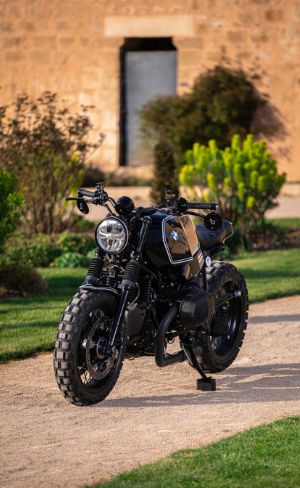
Our designer Alex's vision for this R12 NineT can be summed up in one phrase: reveal the mechanics rather than hide them. This translates into reworked lines, stripped-back mass, the air box replaced by exposed K&N filters, a bespoke rear loop created in our workshop, and a sharpened cockpit. The custom paint with its deep metallic finishes was executed by Celine. The bespoke parts were shaped by Matheo. Assembly and reliability testing are Yoann's work.

The build work goes beyond aesthetics. The structure was lightened with a bespoke rear loop that eliminates the air box and conceals the electronics under the seat. The running gear was rethought with new PVM AC Schnitzer forged aluminium wheels and Michelin tyres for improved grip, a lowered Heritage handlebar for a more dynamic stance, and a titanium silencer that gives the flat-twin a deep, raspy voice. The seat was handmade, with optimised sporty retention and a French flag embroidery: a nod to the local craftsmanship of our Chauvigny workshop.


Accessories fitted on this build: R12 titanium silencer, R12 engine guard, radiator grill, headlight grill, black satin rocker covers, master cylinder covers, Heritage handlebar, PVM AC Schnitzer forged wheels, bar end kit, Heritage foot pegs, Classic mirror kit, Billet fuel cap, Heritage licence plate holder, hub cover, fuel cap holder.
This build is not an endpoint. It is a starting point. We are already developing a Classic Heritage version, an Urban version and a future Off-Road version internally, each with its own identity, true to the FCR Original spirit. The BMW R12 NineT is ready for new stories: yours.
BMW R12 accessories catalogue by category
We have developed a catalogue of 30 accessories for the R12 platform, all compatible with the 4 variants (R12 NineT, R12, R12 S, R12 G/S). Each part is designed in our Chauvigny workshop or selected from our trusted partners (K&N, AC Schnitzer, Hyperpro, HIGHSIDER). All installations are plug & play and reversible, unless otherwise stated.
Exhaust
On a BMW boxer, the exhaust is the part that most radically transforms the riding experience. The R12 comes with twin stock silencers with chrome conical outlets, a decent but anonymous setup. Our grade 2 titanium silencer changes everything: deep, raspy tone, iridescent blue finish that evolves with thermal cycles, maximum weight saving. The removable DB Killer lets you adjust the volume to suit the occasion.

Listen to the R12 titanium silencer:
DB Killer removed. Recorded in real conditions at the FCR Original workshop.
- R12 titanium silencer: grade 2 titanium, evolving iridescent finish, removable DB Killer included. Compatible R12 NineT, R12, R12 S, R12 G/S.
Bodywork, protection and styling


- R12 New Heritage engine guard: black aluminium, essential for mixed use.
- R12 radiator grill: CNC aluminium, installs with no modification.
- R12 radiator grill with side returns: version with side wings for complete protection.
- R12 headlight grill: CNC aluminium, quick fit on the stock LED headlight.
- Heritage rocker covers: CNC aluminium, enhance the visible boxer cylinders.
- Black satin OEM rocker covers: black OEM finish, discreet and premium.
- R12 windshield: fibreglass, raw finish ready to paint, light protection, cafe racer look.
Cockpit and ergonomics


- Heritage handlebar: drag bar or flat-tracker, mounts on stock fixings.
- Bar end kit: CNC aluminium, compatible R12 and R NineT.
- Classic mirror kit: retro design, bar-end mounting.
- Sport mirror kit: compact, sporty version.
- HIGHSIDER Montana mirrors: minimalist alternative.
- Heritage master cylinder covers: machined aluminium, premium finish.
- Heritage foot pegs: CNC aluminium, superior grip, industrial look.
Tank and fuel caps
- Billet cap: milled from solid, mirror finish.
- Monza cap: racing-style, quick release. Three finishes: raw, aged bronze, matte black.
- Rippled cap: concentric grooves, vortex effect.
- R12 fuel cap holder: R12-specific adapter, black anodised, required for CNC fuel caps.
Lighting and signals
- Mini Bates turn signals front/rear: compact vintage style, high-power LED, CE.
- 3-in-1 rear turn signals: indicators + stop + position in one block.
- Bates LED taillight: vintage design, compact.
Licence plate
- Heritage licence plate holder: machined aluminium, compact.
- Side licence plate bracket: compatible R NineT and R12, moves the plate to the side.
Filtration and maintenance

- K&N cleaning kit: to clean and re-oil your filters.
Wheels and chassis
- PVM AC Schnitzer R12 forged wheels: forged aluminium, black finish, significant weight reduction. R12-specific. Professional installation required.
- NineT / R12 hub cover: CNC aluminium, covers the rear wheel hub.
Battery and protection
- Battery booster Power Box PB-02: BS Battery, compact emergency starter.
- Smart charger BS15: 12V, charge maintenance during winter.
- JMP tank protector: adhesive protection for the tank.
Customising your R12: where to start?
With 30 accessories in the catalogue and four variants, it is natural to wonder where to begin. Here is the approach we recommend after months of working on this platform, following the same order we use when equipping our own builds.
Step 1: the titanium silencer. This is the part that changes everything. The sound, the profile, the weight. The stock twin silencer is decent but anonymous. Our grade 2 titanium silencer gives the boxer the voice it deserves: raspy, deep, with that distinctive metallic note that develops a patina with every ride. It is the first investment we recommend, and the satisfaction return is immediate. Listen to the audio sample above if you are on the fence.
Step 2: protection and styling. Engine guard, radiator grill and headlight grill. These three R12 New Heritage parts are specifically designed for the R12 platform and transform the motorcycle's visual without any technical modification. Under 30 minutes to fit all three.
Step 3: the cockpit. Heritage handlebar, Classic mirror kit, CNC bar ends. The view you have of your motorcycle changes radically: every time you sit in the saddle, you see your customisation, not BMW's. Under an hour to fit the lot.
Step 4: the details that make the difference. Fuel cap (Billet, Monza or Rippled depending on your style), rocker covers, Heritage foot pegs, licence plate holder. It is the coherence of the whole that separates a motorcycle with a few accessories from a properly built motorcycle. Every detail counts.
FAQ: the most frequently asked questions
What is the difference between the R NineT and the R12 NineT?+
What is the difference between the 4 BMW R12 variants?+
Are FCR Accessoires parts compatible with all R12 variants?+
Can the parts be installed at home?+
Is the BMW R12 A2 licence compatible?+
How does the FCR titanium silencer sound on the R12?+
What does the R12 change for customisation vs the R NineT?+
Are FCR Accessoires products made in France?+
Why choose FCR Accessoires for your R12?
For over 10 years, FCR Original has been building BMW Heritage motorcycles in its workshop in Chauvigny (86), near Poitiers. The R12 is the natural continuation of our R NineT expertise: same boxer engine, same Heritage philosophy, but an entirely new platform that pushed us to develop dedicated parts. Our first R12 NineT build, featured in this guide, is not a styling exercise: it is a laboratory. Every accessory sold on FCR Accessoires is first tested, adjusted and validated by our team (Matheo, Yoann, Celine) on our own builds before being offered for sale. That is what sets our catalogue apart from a simple reseller.
- In-house development from real R12 builds, in our Chauvigny workshop.
- Premium materials: CNC aluminium, 304 stainless steel, grade 2 titanium, Cerakote.
- Exclusive neo-retro design, consistent with the BMW Heritage aesthetic.
- Compatibility verified on all 4 R12 variants before release.
- Plug & play installation, no irreversible modifications.
- 2-year warranty, technical support by phone at +33 5 49 62 03 26 and WhatsApp.
Ready to transform your R12?
Explore our complete catalogue of BMW R12 accessories and find the parts that match your project, from the detail that changes everything to the complete transformation.
View all R12 accessories
Webmarketing Manager · FCR Original · Published on May 21, 2026

,%20our%20first%20FCR%20...)